
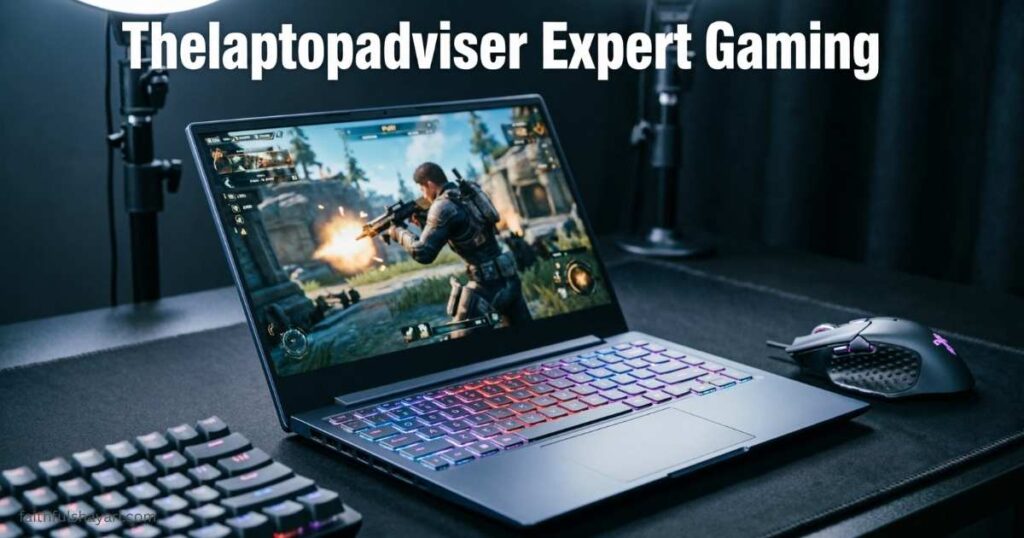

A premium gaming laptop can cost as much as a powerful desktop PC, yet many buyers still end up disappointed. The reason isn’t usually the graphics card or processor—it’s the gap between marketing claims and real-world performance. That’s exactly why interest in thelaptopadviser expert gaming has grown. Readers aren’t simply looking for another list of expensive laptops; they want honest guidance that explains whether a machine actually delivers consistent gaming performance after hours of use.
Having looked closely at the latest gaming laptop reviews, benchmarks, and 2025–2026 hardware launches, one thing becomes clear: the best gaming laptop isn’t always the one with the highest specifications. Cooling, sustained performance, display quality, upgradeability, and battery behavior matter just as much as the GPU sitting inside. Recent flagship models powered by NVIDIA’s RTX 50-series graphics have raised expectations, but they’ve also made choosing the right laptop more complicated than ever.
This guide explains what thelaptopadviser expert gaming really means, what separates trustworthy reviews from marketing hype, and how to evaluate today’s high-end gaming laptops with confidence.
Why thelaptopadviser expert gaming stands out from generic review sites
Most gaming laptop articles follow a predictable formula. They compare CPU models, GPU names, RAM capacity, and storage before declaring a winner. That information is useful, but it rarely answers the question buyers actually care about: Will this laptop still perform well after three hours of gaming?
That’s where the philosophy behind thelaptopadviser expert gaming becomes more valuable. Instead of focusing only on specification sheets, the approach emphasizes practical testing—frame-rate consistency, cooling efficiency, keyboard comfort, fan noise, display quality, and everyday usability. Those factors often determine whether a laptop feels premium six months after purchase rather than just impressive on launch day. Similar review approaches appearing in recent guides also stress real-world testing instead of relying solely on manufacturer specifications.
What most articles won’t tell you is that two laptops equipped with the same RTX GPU can deliver noticeably different gaming experiences. Differences in power limits, cooling design, BIOS tuning, and chassis construction can change performance by double-digit percentages. That’s why experienced reviewers spend time measuring sustained gaming performance instead of relying only on synthetic benchmarks.
The biggest mistake gamers make when buying a flagship laptop
Many buyers believe purchasing the highest-end GPU automatically guarantees the best gaming laptop. That’s rarely true.
Here’s what’s actually going on. Modern gaming laptops are increasingly limited by heat management rather than raw hardware. An RTX 5090 configured with conservative power limits may perform surprisingly close to a properly cooled RTX 5080 or even a high-powered RTX 5070 Ti in certain games. Thermal design determines whether expensive hardware reaches its full potential or spends most of its time reducing clock speeds to stay cool. Recent reviews continue highlighting cooling efficiency as one of the biggest differences between otherwise similar premium laptops.
The difference between good and great here is sustained performance. A laptop that maintains stable temperatures while keeping fan noise reasonable often delivers a better gaming experience than one producing slightly higher benchmark scores but constantly throttling under load.
This is something virtually every article glosses over. Long gaming sessions reveal weaknesses that short benchmark runs simply cannot expose.
What defines a true high-end gaming laptop in 2026?

The premium gaming laptop market has changed dramatically since the arrival of NVIDIA’s Blackwell-based RTX 50-series mobile GPUs.
Today’s flagship systems combine powerful graphics with Intel Core Ultra HX processors or AMD Ryzen AI and Fire Range platforms. Manufacturers are also placing greater emphasis on OLED displays, higher refresh rates, improved AI-assisted power management, and better battery efficiency. NVIDIA’s latest Max-Q technologies were introduced to improve efficiency alongside performance, although real-world gains still vary depending on laptop design.
Recent reviews consistently praise laptops like the Razer Blade 16 for combining premium construction with strong thermal performance, while systems such as the Lenovo Legion Pro series continue earning recognition for maximizing gaming performance. ASUS’ ROG Zephyrus line remains popular among users wanting desktop-class gaming in a thinner chassis, although premium pricing continues to be a concern.
For serious gamers, the display now deserves nearly as much attention as the graphics card. Fast OLED panels with excellent color accuracy and refresh rates up to 240Hz create a noticeably smoother experience than older IPS displays, especially in competitive games.
What most buyers overlook before spending $3,000 or more
Buying a premium gaming laptop isn’t simply about choosing between an RTX 5080 and an RTX 5090. The specification sheet only tells part of the story. One factor that experienced reviewers pay close attention to is Total Graphics Power (TGP)—the amount of power the laptop allows the GPU to use. Two laptops carrying the same graphics chip can perform very differently if one is limited to a lower wattage. That’s why thinner machines sometimes trail larger competitors despite advertising identical hardware. Current buying guides continue to emphasize TGP as one of the most important specifications that manufacturers don’t always highlight in marketing.
Another overlooked consideration is upgradeability. Some premium laptops now solder memory to the motherboard to achieve thinner designs, while others still provide accessible RAM and SSD slots. If you expect to keep your laptop for four or five years, that difference matters. Display quality is equally important. Modern OLED panels deliver richer colors, deeper blacks, and faster response times than many traditional IPS screens, making both competitive esports and cinematic single-player games more immersive. The best review sources evaluate all these elements together rather than treating raw benchmark numbers as the final verdict.
Separating myths from reality
One persistent myth is that laptop versions of desktop graphics cards offer identical performance. They don’t. Thermal limits, battery constraints, and power delivery mean that even an RTX 5090 laptop GPU operates differently from its desktop counterpart. That isn’t a flaw—it’s simply the reality of fitting high-end hardware into a portable chassis. Recent industry analysis continues to stress that mobile GPUs should be judged by efficiency and sustained gaming rather than direct desktop comparisons.
Another misconception is that every new hardware generation makes the previous one obsolete. That’s rarely true. Well-designed RTX 40-series laptops still provide excellent gaming performance for many players, particularly when priced significantly below newer models. Community discussions also reflect this view, with experienced users recommending buyers prioritize cooling quality, VRAM capacity, and overall laptop design instead of chasing the newest model number alone.
What’s changed in 2026 that competitors are still catching up to
The premium gaming laptop landscape in 2026 has evolved beyond simply chasing higher frame rates. Manufacturers are focusing on longer battery life, improved OLED displays, quieter cooling systems, and AI-assisted power management alongside NVIDIA’s RTX 50-series mobile GPUs. Computex announcements and recent reviews show an industry-wide shift toward balancing portability with desktop-class performance rather than maximizing benchmark scores at any cost.
Battery life is perhaps the biggest surprise. Some flagship gaming laptops now exceed thirteen hours of light productivity while still delivering exceptional gaming performance when plugged in—a level of endurance that seemed unrealistic only a few years ago. That doesn’t mean you’ll game for half a day on battery power, but it does make these machines far more practical for work, school, or travel than previous generations. At the same time, premium pricing remains a challenge, with flagship configurations frequently exceeding $3,500.
Frequently Asked Questions
Is thelaptopadviser expert gaming a reliable source for gaming laptop advice?
Its value depends on whether reviews prioritize real-world testing instead of repeating manufacturer specifications. The most useful reviews examine sustained gaming performance, thermals, display quality, build quality, and long-term usability.
Which gaming laptop brand performs best in 2026?
There isn’t a universal winner. ASUS ROG, Lenovo Legion, MSI, Razer, and HP OMEN all produce excellent flagship systems, but the best choice depends on your budget, portability needs, and preferred games.
Is an RTX 5090 laptop worth buying?
If you want the fastest mobile gaming experience and don’t mind paying a premium, it can be worthwhile. For many gamers, however, an RTX 5080 or well-configured RTX 5070 Ti provides a better balance between cost and performance.
Does cooling really affect gaming performance?
Yes. Poor thermal design can reduce clock speeds during extended gaming sessions, lowering frame rates even when the laptop has premium hardware.
Should I wait for newer gaming laptops?
If your current laptop still meets your needs, waiting can bring better pricing and newer designs. If you need a system now, several RTX 50-series laptops already offer outstanding performance and mature driver support.
What’s the most important specification beyond the GPU?
Many experts would argue it’s the laptop’s cooling system and TGP configuration. These directly influence how much of the GPU’s advertised performance you’ll actually experience in real games.
Final thoughts
The biggest lesson from researching thelaptopadviser expert gaming is that buying a premium gaming laptop isn’t about finding the most expensive model—it’s about understanding how every component works together. Specifications grab attention, but cooling, power delivery, display quality, build quality, and long-term reliability determine whether a laptop still feels exceptional after months of daily use.
As gaming laptops continue evolving through 2026, the smartest buyers will look beyond marketing slogans and benchmark charts. A well-balanced machine with excellent thermal management and thoughtful engineering often delivers a better experience than a more expensive alternative with higher numbers on paper. That’s the difference between purchasing impressive hardware and investing in a gaming laptop you’ll genuinely enjoy using for years.
You May Also Read: The Ecological Realities of Modern Cosmetic Production