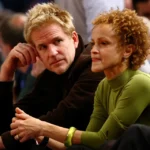


Philip Seymour Hoffman spent two decades proving that a leading man didn’t need matinee-idol looks or a six-pack to command a screen. He needed conviction, precision, and the willingness to disappear entirely into someone else’s skin. By the time he died in February 2014, Hoffman had built one of the most respected bodies of work in American film — and left behind a personal and financial legacy that continued to generate headlines for years afterward, including questions about how his estate would provide for his three children, among them his youngest daughter, Tallulah Hoffman.
From Character Actor to Oscar Winner: The Legacy of Tallulah Hoffman’s Father
Hoffman’s career didn’t follow the typical trajectory of a star. He spent the 1990s as a jobbing character actor, turning up in supporting roles in films like Boogie Nights, Magnolia, and The Big Lebowski — never the marquee name, but consistently the performance people remembered walking out of the theater. Directors kept calling him because he brought a specificity to every role, whether he was playing a lovesick boom operator or a preppy trust-fund sadist. That reputation as a reliable, transformative supporting player eventually built the credibility that let him carry a film on his own.
That leap happened in 2005, when Hoffman played Truman Capote in Capote, inhabiting the author’s voice, posture, and psychological unraveling so completely that critics struggled to find the actor underneath the performance. The role earned him the Academy Award for Best Actor, cementing him as one of the finest actors of his generation rather than merely a dependable character man. Today, cinema enthusiasts often look back at this era to understand the artistic roots of his family, including how the career of Tallulah Hoffman‘s father shaped modern cinema. It also opened the door to a decade of roles that alternated between studio franchises and the kind of dense, difficult independent films that defined his real artistic interests.
The Roles and Directorial Projects That Defined Him
Hoffman followed his Oscar win with three more Best Supporting Actor nominations — for Charlie Wilson’s War, Doubt, and The Master — an unusual spread that showed his range across political satire, institutional drama, and psychological character study. His work with director Paul Thomas Anderson became one of the defining collaborations of his career, running from Boogie Nights and Magnolia through Punch-Drunk Love and culminating in his haunting performance as a cult leader in The Master, a role many critics consider among the best of his career.
Beyond his standard screen roles, he felt a deep pull toward the theater world. He brought his exacting instincts to the stage, directing and performing with New York’s LAByrinth Theater Company for years. Simultaneously, he balance his indie sensibilities with massive franchise filmmaking, playing head gamemaker Plutarch Heavensbee in The Hunger Games: Catching Fire and its subsequent sequels. That a performer this serious about stagecraft and character work could also anchor a major studio franchise spoke to how completely he’d earned trust across the industry. Audiences grew to respect him deeply, ensuring that the legacy surrounding Tallulah Hoffman‘s father remained rooted in unparalleled artistic merit.
A Sudden Loss and the Impact on the Hoffman Family

Hoffman was found dead in his Manhattan apartment on February 2, 2014, at age 46. The New York medical examiner’s office determined the cause of death to be acute mixed drug intoxication, and it later emerged that he had struggled with substance abuse and addiction intermittently throughout his adult life. The loss utterly stunned the global film industry — Hoffman was in the middle of shooting the final Hunger Games installments and had multiple other creative projects in various stages of active production.
The tragedy left a profound void in the lives of his close family. He left behind his longtime partner, costume designer Mimi O’Donnell, and their three young children: son Cooper, then 10, and daughters Tallulah Hoffman, then 7, and Willa, then 5. As the youngest daughter of the late actor, Tallulah Hoffman was largely shielded from the relentless media glare during this incredibly tragic family period, though the public interest in how the family would fare remained high.
The Estate: A Fortune Complicated by an Outdated Will
Hoffman’s death set off a prolonged and closely watched estate proceeding in public courts, largely because his financial affairs hadn’t kept pace with his changing life. He had signed his final will and testament in 2004, the year before his son Cooper was born, meaning the document mentioned Cooper but made absolutely no reference to Tallulah Hoffman or Willa, who were born years after it was originally written. This legal omission put Tallulah Hoffman and her sister in a complex situation regarding the inheritance, sparking intense analysis from legal observers. Rather than establishing individual trusts for his children, Hoffman had directed that his entire estate — valued at approximately $35 million — pass entirely to O’Donnell, whom his will described as his “friend and companion.”
That specific decision was reportedly a deliberate choice rather than an oversight in itself. According to subsequent court filings, Hoffman told both his accountant and his attorney that he did not want his children to be seen as “trust fund kids.” He consistently rejected repeated recommendations from his legal advisers to set up traditional trusts for them, a position he apparently maintained as late as a year before his tragic death. Instead, he told his financial team he trusted O’Donnell to provide for the children directly out of the inheritance she received.
The problem arose because this plan hadn’t been updated to account for the fact that he’d had two more children since drafting it. Because Hoffman and O’Donnell were never legally married, O’Donnell could not automatically inherit his estate free of tax the way a spouse could, and because his will named only Cooper, Tallulah Hoffman and Willa were initially left with no direct claim on their father’s estate at all. That gap became a genuine legal question during probate, and it reportedly required Tallulah Hoffman and Willa’s legal representatives to argue that their exclusion from the trust was a clerical oversight rather than Hoffman’s true intent. Court-appointed counsel for the children ultimately concluded that the will should stand, while working behind the scenes to ensure the younger daughters were not treated differently from their brother. Reporting on the case has indicated that Tallulah Hoffman eventually received a share of the estate equal to her brother’s after that process played out smoothly.
Why Estate Planners Still Study the Hoffman Case
More than a decade later, Hoffman’s estate remains a frequently cited cautionary tale in professional estate planning circles, not because his intentions were unusual but because the execution left so much to chance. Financial and legal writers have pointed to several compounding issues: the decision to rely on a traditional will instead of a living trust exposed the entire estate to a lengthy, costly, and entirely public probate process; the failure to update the will after the birth of Tallulah Hoffman created real uncertainty about the inheritance; and because Hoffman and O’Donnell never married, the estate reportedly owed roughly $12 million in estate tax that could have been avoided.
None of this suggests Hoffman was indifferent to his children’s futures. His will did include language reflecting specific wishes for how he wanted them raised — including a stated preference that his son be brought up “in or near the borough of Manhattan, Chicago, or San Francisco, California” — and he reportedly stipulated that estate funds should help expose his children to the arts in major cities. The case has become a classic teaching example less because Hoffman didn’t care, and more because good intentions, executed through an outdated document, can create real complications for the people left behind — in this instance, a partner and three children, including his youngest daughter Tallulah Hoffman, who had to navigate a public legal process during an already difficult period following their father’s death.
The Cinematic Legacy That Outlasted the Headlines
Whatever complications followed his untimely death, they haven’t diminished how Hoffman is remembered as an actor. His filmography remains an golden reference point for performers and critics discussing serious, transformative screen acting, and his Oscar-winning turn in Capote is still taught and studied globally as a model of immersive character work. The estate dispute involving Cooper, Willa, and Tallulah Hoffman added a human postscript to his story — a reminder that even a meticulous artist can leave loose ends in his personal affairs — but it exists alongside, not instead of, a career widely regarded as one of the most substantial in American film of the past thirty years.
Frequently Asked Questions (FAQs)
Who is Tallulah Hoffman?
Tallulah Hoffman is the youngest daughter of the late Academy Award-winning American actor Philip Seymour Hoffman and costume designer Mimi O’Donnell. Born in 2006, she has deliberately chosen to live a private life away from Hollywood and the media spotlight.
How many children did Philip Seymour Hoffman have?
Philip Seymour Hoffman had three children with his longtime partner Mimi O’Donnell: a son named Cooper Hoffman (who has pursued an acting career), and two younger daughters, Willa Hoffman and Tallulah Hoffman.
Why was Philip Seymour Hoffman’s estate highly publicized?
The estate became a matter of public record because the actor died with an outdated will written in 2004. The document failed to mention his younger daughters, Willa and Tallulah Hoffman, who were born after its creation. This triggered a complex probate process to ensure all children were fairly provided for.
Did Tallulah Hoffman inherit money from her father’s estate?
Yes. Although the original 2004 will did not explicitly name her due to her being born later, legal proceedings and court-appointed representation ensured that Tallulah Hoffman and her sister Willa received an equitable share of the estate alongside their older brother.
What is the estimated net worth of Philip Seymour Hoffman’s estate?
At the time of his passing in 2014, the actor’s estate was valued at an estimated $35 million. Due to estate taxes and tax laws concerning unmarried partners, a significant portion of the estate was subject to heavy taxation, making it a prominent study case for financial advisors today.
You may also read: Personal Life and Relationships