

Every winter, billions of pounds worth of heat disappears through the walls, roofs and draughty gaps of British homes, and British homeowners simply pay for every watt of it. If you have been telling yourself that you will get around to it eventually, 2026 is the year that excuse runs out. A seismic shift in government policy — the £15 billion Warm Homes Plan — has redrawn the map for households across England, Scotland and Wales, while a wave of cheap DIY measures means that anyone who wants to know how to insulate your home UK cheaply now has more options than at any point in recent memory. This is not a story about abstract carbon targets. It is a story about money leaving your pocket every single month.
The scale of the problem is striking. British housing is widely regarded as among the least energy-efficient in Europe, a legacy of Victorian terraces, post-war builds and a political culture that consistently deferred the problem to the next parliament. The average energy efficiency rating across English homes at the end of 2023 was a bare D, and more than 80 per cent of homes built before 1930 sit in bands D to G. The gap between what those households pay and what they need to pay is, in many cases, simply the absence of insulation.
Why the Case for Acting Now Has Never Been Stronger
The timing of this moment matters. For years, the question of how to insulate your home UK cheaply was muddied by a confusing patchwork of overlapping schemes, contradictory eligibility rules and installers who varied wildly in quality and accountability. That picture is changing fast. The Warm Homes Plan, published on 21 January 2026, brings together multiple schemes with just under £15 billion in capital investment — the largest energy efficiency programme in British history. It is designed not to complement old schemes but to replace them entirely, and in doing so to reach households that the previous ECO and GBIS programmes never managed to touch.
The immediate consequence of this shift is that the window on certain existing schemes is closing. The Great British Insulation Scheme ended as planned on 31 March 2026, while ECO4 has been extended only to allow remediation of non-compliant installations, with no new delivery targets. The Warm Homes: Local Grant, which started in April 2025, is now the primary route for low-income households to access free or heavily subsidised upgrades. Eligible households can access measures including cavity wall insulation, loft insulation, draught-proofing, double glazing, air source heat pumps, heating controls, insulated doors and solar panels. This is not a token gesture. The ambition is to lift a property’s EPC rating to a C, a change that can reduce annual heating bills by several hundred pounds.
For households that do not qualify for grants, the private market has also become more competitive. Installers have sharpened their pricing in a market now shaped by government activity, and the cost of materials available to the confident DIY enthusiast has never been more accessible. The point — whether you are approaching this via a grant scheme, a professional installer or a Sunday afternoon and a roll of mineral wool — is simply to start.
How to Insulate Your Home UK Cheaply: The Practical Breakdown
The temptation with any guide to home insulation is to begin with the most dramatic and expensive interventions. Solid wall insulation, which can run to between £8,000 and £22,000 for a full treatment, undeniably offers the most comprehensive protection against heat loss. But for the vast majority of homeowners trying to understand how to insulate your home UK cheaply without remortgaging, the sensible approach is to work through the measures in ascending order of cost — securing quick wins before committing to larger expenditure. The cumulative effect of several modest improvements can be remarkably significant.
Draught-Proofing: The Fastest Return on Any Pound You Spend

Draught-proofing is, without question, the cheapest form of home insulation available, and its impact is immediate. Common areas for draughts in UK households include the gaps under and around doors and letterboxes, as well as cracks and holes around pipework. Addressing them requires nothing more sophisticated than a trip to a hardware shop. Self-adhesive foam strips for window frames cost a matter of pennies per metre. Draught excluders for doors cost no more than £10 and could save you up to £50 a year on your energy bills. Silicone sealant for gaps around pipes and skirting boards costs less than a weekday lunch. A full DIY draught-proofing job costs under £50, while a professional job runs to between £100 and £400 for a whole property, and it is also the fastest — a typical house can be draught-proofed in a single day. For anyone mapping out how to insulate your home UK cheaply, draught-proofing is always step one.
Loft Insulation: The Single Highest-Return Home Improvement in Britain
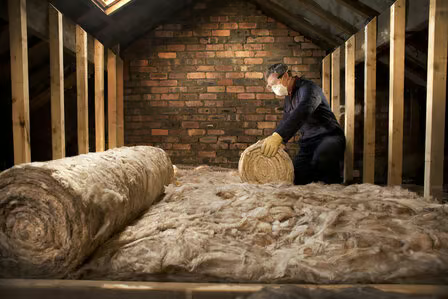
Approximately a quarter of the heat lost in a home escapes through the roof space. Loft insulation exists specifically to address this, and it does so with a speed and cost-efficiency that no other measure quite matches. The recommended depth in the UK is 270mm. DIY loft rolls start from around £20 per pack and are straightforward to lay between joists. Many older properties still have insulation at 100mm or less — simply topping up to the current standard can unlock meaningful savings without any structural disruption. Fibreglass rolls of loft insulation start at around £5 per metre and could save you as much as £300 annually.
For a professionally installed job, loft insulation costs approximately £930 and can reduce heat loss by as much as 25%, with potential savings of up to £225 annually on energy bills, meaning the investment typically pays for itself in under two years. Given that loft insulation lasts for decades with virtually no maintenance, this is one of the most straightforward economic arguments in home improvement. It is also one of the measures most commonly funded through government schemes, so households that may qualify for the Warm Homes: Local Grant should check their eligibility before paying anything out of pocket.
Cavity Wall Insulation: Addressing the Biggest Single Source of Heat Loss
Uninsulated walls can cause up to 35 per cent of a home’s heat loss. The good news is that the majority of homes built in the UK after around 1930 have cavity walls — two layers of brick with a gap between them — and these cavities can be filled relatively quickly and cleanly by a qualified installer. In the average UK home, cavity wall insulation can decrease heat loss by 33 per cent, potentially saving up to £500 per year on heating bills, with prices starting from £700. The process involves drilling small holes in the external masonry, injecting insulating material, and re-rendering the holes. For a three-bedroom semi-detached house, the total job typically takes between two and three hours. This is precisely the type of measure that, if you qualify for government support, should absolutely be applied for before any private payment is made.
Cheap Wins That Are Easy to Overlook
Beyond the headline measures, several low-cost improvements deserve more attention than they typically receive. A jacket for a hot water cylinder costs around £20 and will pay for itself within the first year. Pipe insulation — foam lagging applied to exposed pipes in lofts and garages — costs £15 to £30 in materials and saves £30 to £60 per year, while also protecting against burst pipes in cold weather. Window film kits — a temporary double-glazing solution for homes where full replacement is not yet financially viable — can insulate your windows at low cost and save around £15 a month for households with draughty or single-glazed windows. Radiator reflective panels, which direct heat back into the room rather than allowing it to be absorbed into cold external masonry, cost under £30 for a full set and are another under-rated addition for anyone thinking seriously about how to insulate your home UK cheaply.
Government Support in 2026: What Is Available and Who Can Access It
The policy environment around home insulation has shifted more significantly in the past eighteen months than at any point since the original ECO scheme launched in 2013. The Warm Homes Plan replaces existing ECO-style schemes as they come to an end and brings insulation, heating and clean energy technologies under one programme, backed by a £15 billion government commitment between 2025 and 2030.
The Warm Homes: Local Grant is the most immediately relevant scheme for lower-income homeowners and private tenants in England. Eligibility requires a household income of £36,000 or below, or receipt of qualifying benefits, combined with a property EPC rating of D to G. Up to £15,000 per property is available for energy performance improvements, with a separate allocation for low-carbon heating. Eligible households do not need to source their own installer or manage the process independently — local authorities are the delivery mechanism.
ECO4 has been extended to December 2026 to allow additional time for remediation of non-compliant installations, with £1.5 billion in funding originally allocated to ECO being redirected to the Warm Homes: Social Housing Fund and the Warm Homes: Local Grant. Households in Scotland can access the Warmer Homes Scotland scheme, while those in Wales have the Nest programme. Northern Ireland operates its own equivalent through the Sustainable Energy Programme.
For households that fall above the income thresholds for grant funding, a new £2 billion loan scheme will help households pay for solar panels, home batteries, insulation and heat pumps, with government support keeping repayments low. It is a recognition that the barrier to home improvement is not always outright poverty — it is often the combination of upfront cost and uncertainty about return on investment.
The Future Outlook: What This Policy Shift Means for British Homes
The Warm Homes Plan aims to upgrade 5 million homes, help 1 million families, and create over 180,000 green jobs by 2030. In the spending review in June 2025, the government confirmed the £13.2 billion in funding for the scheme pledged in the Labour manifesto, covering spending between 2025–26 and 2029–30. This is not a programme that will be quietly shelved after the first parliamentary recess.
The financial case for households to engage with this shift is equally compelling. A typical three-bedroom semi needs £2,000 to £4,000 of insulation work covering loft, cavity wall and draught-proofing. That saves £450 to £800 per year on heating bills, paying for itself in three to five years. If you qualify for ECO4 or the Warm Homes: Local Grant, the cost could be zero. There are also two changes announced at the 2025 Budget which are expected to cut energy bills for all homes by an average of £150 a year from April 2026.
There is also a longer-term property angle that is becoming impossible for homeowners to ignore. Under regulations being phased in, private landlords will be required to bring their properties up to EPC Band C by 2030, and the Future Homes and Buildings Standards will require new-build homes to meet much higher energy efficiency thresholds from the outset. Properties that are poorly insulated are becoming increasingly costly to run, increasingly difficult to let and decreasingly attractive to buyers. The value of a well-insulated home is already being priced into the market, and that premium is only going to grow.
Making a Start: Where to Begin This Weekend
The single most common reason British homeowners have not yet insulated their homes is not cost or indifference — it is inertia in the face of a decision that feels bigger and more complicated than it really is. In practice, the entry point is entirely manageable. Start with draught-proofing. Walk around your home on a cold evening with a candle or incense stick and trace where the cold air is coming from. Buy foam strips for the windows, a brush strip for the front and back doors, and a tube of silicone sealant. Spend an afternoon fitting them. You will feel the difference that night.
From there, check your loft. If you can see the tops of the joists, your insulation is below 100mm and topping it up should be the next priority. If your home has cavity walls — and most properties built between the 1930s and 1990s do — get an installer to assess whether they have been filled. If not, contact your energy supplier or local authority to ask about Warm Homes: Local Grant eligibility before committing to any private payment.
The broader shift happening in UK housing policy is, at its core, about making the thermally leaky British home a thing of the past. The grants available right now, the loan schemes coming down the track, and the straightforward DIY measures that cost almost nothing — taken together, they represent an answer to the question of how to insulate your home UK cheaply that is more complete than it has ever been. The warmth is there. The funding is there. The tools are in the shops. The only remaining variable is when you decide to start.
You may also read: Deep Dive Into Cheap Home Improvement Ideas UK That Actually Work