


Introduction
Damp walls are a very common problem in homes across the UK, especially in older buildings and during cold, wet weather. If you ignore damp, it can slowly damage your walls, ruin your paint, and even affect your health. That is why learning how to repair damp walls UK is important for every homeowner or tenant who wants to keep their property safe and dry.
In simple terms, damp happens when moisture builds up inside your walls and cannot escape. This moisture can come from rain, the ground, or even daily activities like cooking and showering. Over time, it leads to mould, stains, and bad smells, which can make your home uncomfortable and unhealthy.
In this detailed guide, you will learn everything about how to repair damp walls UK, including types of damp, signs to watch for, step-by-step repair methods, costs, and prevention tips. Everything is explained in simple UK English so beginners can easily understand and apply it.
What are damp walls?
Damp walls are walls that have absorbed too much moisture and cannot dry properly. This moisture gets trapped inside the wall materials like plaster or bricks, making them weak and damaged over time. You might notice your walls feel cold, wet, or even sticky when touched.
In the UK, damp walls are very common due to heavy rain, cold weather, and poor ventilation in many homes. When warm air inside your house meets cold walls, it turns into water droplets, which leads to damp patches. This process is simple but causes long-term problems if not treated properly.
Damp walls are not just a cosmetic issue. They can lead to serious problems like mould growth, structural damage, and higher heating costs because damp walls lose heat faster. That is why understanding how to repair damp walls UK is essential before the problem becomes expensive.
Types of damp in UK homes
Understanding the type of damp is the first step in solving the problem. There are three main types commonly found in UK homes, and each has a different cause.
Rising damp is caused when moisture from the ground travels upward through walls. This usually happens if the damp-proof course (DPC) is damaged or missing. You will often see marks or stains near the bottom of the wall, along with crumbling plaster or white salt marks.
Penetrating damp occurs when water enters your home from outside. This can happen due to broken gutters, cracked walls, or leaking roofs. It can appear anywhere on the wall and often gets worse after heavy rain, making it easier to identify.
Condensation is the most common type of damp in the UK. It happens when moist air from everyday activities like cooking or drying clothes settles on cold surfaces. This leads to water droplets, mould, and damp patches, especially in kitchens, bathrooms, and bedrooms.
Signs of damp walls
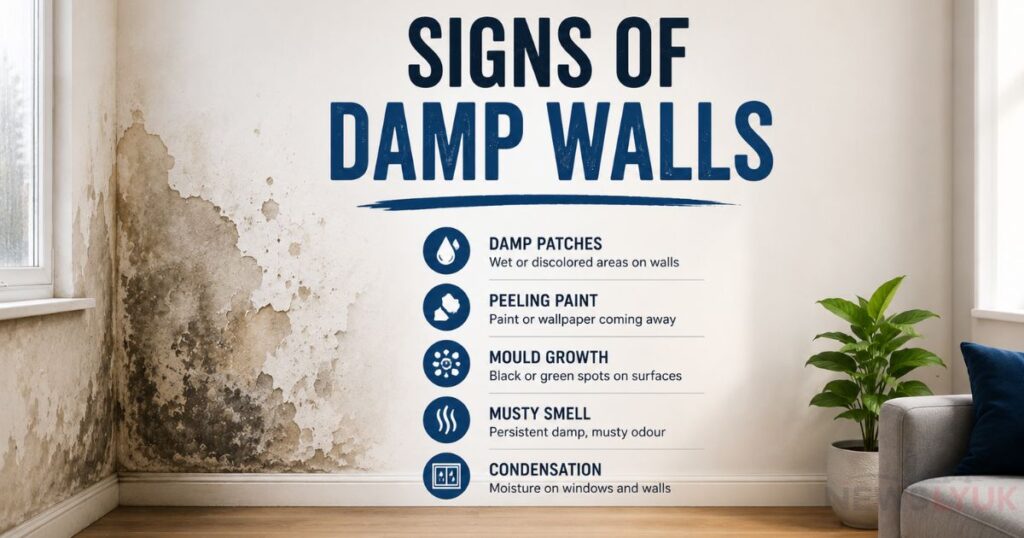
Damp walls often show clear warning signs if you look closely. Spotting these signs early can help you fix the problem before it becomes serious and costly.
Some of the most common signs include peeling paint, bubbling wallpaper, and dark patches on walls. You may also notice a musty smell in the room, which is a strong indicator of trapped moisture. These signs usually appear slowly but get worse over time.
Mould growth is another major sign of damp. Black mould often appears in corners, behind furniture, or near windows. Walls may also feel cold and damp to the touch, which shows that moisture is still present inside.
Here are quick signs to check:
- Peeling or flaking paint
- Musty smell in rooms
- Black mould patches
- Damp or cold wall surfaces
Recognising these signs early will make how to repair damp walls UK much easier and cheaper.
How to repair damp walls UK step by step
Fixing damp walls is not just about painting over the problem. You must follow the correct steps to ensure the damp does not return.
The first step is to identify the source of the damp. This could be poor ventilation, leaking pipes, or damage to your roof or walls. Without finding the cause, any repair work will only be temporary.
The second step is to fix the source of moisture. This may involve repairing gutters, sealing cracks, fixing leaks, or improving ventilation. Once the cause is fixed, you must allow the wall to dry completely. This can take days or even weeks depending on the severity of the damp.
The third step is repairing the wall itself. Remove damaged plaster, clean any mould, and apply damp-proof treatments. After that, repaint the wall using moisture-resistant paint.
Simple step process:
- Find the cause
- Fix the source
- Dry the wall
- Repair and repaint
Following these steps carefully is the best way to handle how to repair damp walls UK effectively.
Best products to fix damp walls in the UK
Using the right products can make a big difference when dealing with damp walls. However, products should only be used after fixing the main cause of damp, not before.
Damp-proof paint is one of the most popular solutions. It creates a barrier that stops moisture from coming through the wall. Waterproof sealants are also useful for blocking small cracks and preventing water entry.
Anti-mould sprays are important for cleaning and stopping mould growth. Dehumidifiers are another great tool, especially for condensation problems, as they reduce moisture in the air and help walls dry faster.
Useful products include:
- Damp-proof paint
- Waterproof sealants
- Anti-mould cleaners
- Dehumidifiers
These products support your efforts in how to repair damp walls UK, but remember they are not a replacement for fixing the root problem.
Cost of repairing damp walls in the UK
The cost of repairing damp walls in the UK can vary depending on the type and severity of the problem. Small issues are usually affordable, but serious damp problems can be more expensive.
Minor repairs like cleaning mould or repainting walls can cost between £100 and £300. Medium repairs, such as fixing leaks and replastering, may cost between £300 and £800. Larger jobs like installing a new damp-proof course can cost £500 to £2000 or more.
It is always better to fix damp early to avoid higher costs later. Delaying repairs can lead to structural damage, which is much more expensive to fix.
Here is a quick cost guide:
- Small repairs: £100–£300
- Medium repairs: £300–£800
- Full treatment: £500–£2000+
Understanding costs helps you plan better when learning how to repair damp walls UK.
How to prevent damp walls in the future
Preventing damp is easier and cheaper than repairing it. Once you fix the problem, it is important to take steps to stop it from coming back.
Good ventilation is the most important factor. Open windows regularly and use extractor fans in kitchens and bathrooms. This helps remove moist air and prevents condensation from forming on walls.
Regular maintenance of your home is also essential. Check for leaks, clean gutters, and repair cracks in walls as soon as possible. Keeping furniture slightly away from walls also improves airflow and prevents hidden damp.
Simple prevention tips:
- Open windows daily
- Use fans and ventilation
- Fix leaks quickly
- Keep air flowing
By following these steps, you can avoid future problems and keep your home dry.
Conclusion
Learning how to repair damp walls UK is essential for maintaining a healthy and comfortable home. Damp walls may seem like a small issue at first, but they can lead to serious damage if ignored.
The key to success is understanding the type of damp, fixing the source of moisture, and then repairing the wall properly. Whether it is rising damp, penetrating damp, or condensation, each problem has a clear and effective solution.
By using the right methods, products, and prevention techniques, you can protect your home from damp for the long term. A dry home is not only better for your health but also saves money and increases the value of your property.
You may also read: Average Renovation Cost per Square Meter in the UK